

Portable Air Purifiers for Travel: A Buyer's Guide
Table of Contents
- What Makes a Portable Air Purifier Travel-Friendly
- Understanding Portable Air Purifier with HEPA Filter Technology
- Travel Air Purifier for Hotel Room: Coverage and Noise
- Wearable Air Purifier Options for Personal Protection
- Air Purifier for Airplane Travel: What You Should Know
- Key Selection Criteria and Common Mistakes
- Maintenance, Filter Costs, and Total Ownership
- Frequently Asked Questions
Last Updated: October 5, 2026
What Makes a Portable Air Purifier Travel-Friendly
Portable air purifiers travel best when they balance filtration power with genuine convenience. Three factors separate a travel-worthy unit from a stationary one: weight, battery runtime, and whether it fits in your carry-on or hotel room without dominating the space.
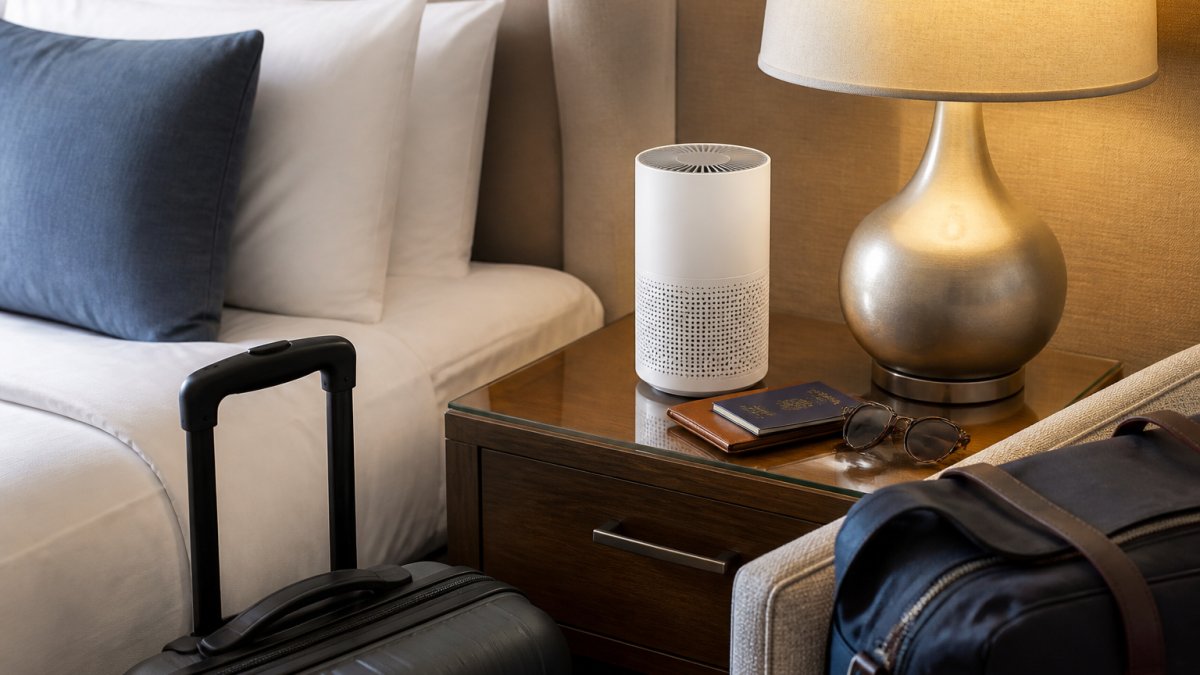
Most travelers prioritize filtration power over portability. A unit that removes 99.97% of particles sounds great until you're hauling a 5-pound device through three airports. The best travel air purifier cleans a small to medium room effectively while staying light enough that you don't resent carrying it.
Size, Weight, and Portability
A travel-friendly portable air purifier should weigh no more than 2-3 pounds and fit in a carry-on bag or backpack, think phone-sized or slightly larger. The most practical models measure around 6-8 inches tall with a compact footprint that doesn't require dedicated shelf or floor space.
Consider where you'll use it. In a hotel room, it might sit on a nightstand; on an airplane, it needs to fit on your lap or tray table without blocking your neighbor.
Weight matters more than people realize. A 5-pound unit feels manageable in a store but becomes annoying after carrying it through an airport terminal. Aim for under 2 pounds for true portability, or accept the trade-off between power and convenience.
Battery Life and Power Options
How your portable air purifier stays powered directly impacts its usefulness. Look for at least 4-6 hours of continuous runtime per charge, enough for a full workday in a hotel room or multiple shorter sessions.
USB-powered models charge from a laptop, power bank, or standard outlet, so you're not hunting for a specific charger. Some units support both USB and plug-in options. A rechargeable battery is non-negotiable for travel; disposable batteries add weight and waste.
Charging time matters too. A unit that takes 8 hours to charge but runs only 4 leaves you waiting between uses; 2-3 hour charge times are more practical for travelers on the move. Check whether the device can operate while charging, which extends your flexibility.
Understanding Portable Air Purifier with HEPA Filter Technology
The filtration system is where portable air purifiers earn their value. A HEPA filter captures particles as air passes through it, removing dust, pollen, smoke, and other airborne pollutants.
How HEPA and Carbon Filters Work Together
A portable air purifier with HEPA filter technology uses a multi-layer approach. The HEPA layer, true HEPA, not "HEPA-type", captures 99.97% of particles 0.3 microns or larger, including dust, pet dander, pollen, and most mold spores (the EPA).
The best units combine both: HEPA handles particles, carbon handles gases and odors. A three- or four-layer system beats a single filter, and some models add a pre-filter that catches larger debris, extending the HEPA layer's life.
When evaluating a portable air purifier for travel, verify it uses true HEPA, not imitations. Terms like "HEPA-type" or "HEPA-like" indicate filters that don't meet the official standard; real HEPA certification is the only way to confirm the filter removes the particles it claims to.
Filtration Efficiency and Air Changes Per Hour
Air changes per hour (ACH) tells you how many times the unit cycles a room's entire air volume through the filter each hour. Portable air purifiers travel effectively when they achieve at least 2-3 ACH for a 200-square-foot hotel room. Higher is better, but portability limits what's realistic.
CADR (Clean Air Delivery Rate) measures how much filtered air the unit delivers per minute for smoke, dust, and pollen. A CADR of 50 or higher for smoke suggests it can handle a small room effectively.
Filtration efficiency depends on filter quality and motor strength. A powerful motor pushing air through a thin filter is less effective than a slower motor with a denser, multi-layer filter. Real-world performance matters more than paper specs.
Travel Air Purifier for Hotel Room: Coverage and Noise
A travel air purifier for hotel room use needs to clean the air without becoming an annoyance. Hotel rooms vary wildly in size, and noise is a genuine concern when you're trying to sleep or work.
Room Size and Coverage Area Matching
Most hotel rooms fall in the 150-300 square foot range. A portable air purifier rated for 200-250 square feet handles this comfortably.
Don't assume a larger rating is always better. An oversized portable air purifier drains more battery, weighs more, and may be louder. A unit matched to your actual room size runs more efficiently and quietly.
Placement matters. Position your portable air purifier in the center of the room or near the source of odors or pollutants; corners and walls reduce effectiveness. In a tight hotel room, that might mean the nightstand or a small table rather than the floor.
Noise Levels and Quiet Operation
Hotel rooms are quiet spaces, and a portable air purifier that hums loudly at night becomes frustrating fast. Look for units rated 30-40 decibels on their lowest setting, roughly a whisper or quiet library. Anything above 50 decibels will be noticeable and potentially disruptive.
Most portable air purifiers have multiple fan speeds. The lowest speed reduces noise and extends battery life, though it slows air cleaning, fine for overnight use. Higher speeds are acceptable during the day when you're out or working.
Real-world noise varies by model. Some units insulate the motor better; others use quieter fan designs. User reviews mentioning actual noise levels are more reliable than manufacturer specs.
Wearable Air Purifier Options for Personal Protection
Wearable air purifiers take a different approach: rather than cleaning a room, they create a filtered zone around your face. They appeal to travelers concerned about airplane cabins, crowded transit, or public spaces.
How Wearable Devices Differ from Stationary Units
A wearable air purifier is typically a small device worn around the neck or clipped to clothing. It draws air through filters and releases clean air toward your breathing zone, you're not cleaning the environment, just the air immediately around your face.
These devices use smaller HEPA filters and compact batteries, making them lightweight and portable by definition. Their coverage is limited, though: they work best when you're stationary, at a desk, on an airplane, or in a waiting area, and less well when you're moving or air currents push unfiltered air toward you.
Realistic Expectations for Personal Air Purifiers
Wearable air purifiers reduce exposure rather than eliminate it. A unit rated for 99% particle removal still lets 1% through, better than no protection, but not a guarantee of clean air.
Treat these devices as supplementary protection, not primary defense. If you're traveling with elderly relatives or young children whose immune systems are more vulnerable, a wearable unit can provide peace of mind, but it doesn't replace basic hygiene like hand washing and mask wearing when appropriate.
Wearable battery life is typically 4-8 hours, enough for a day of travel or a flight. Overnight use requires a charge or a second device.
Air Purifier for Airplane Travel: What You Should Know
Airplane cabins present a unique air-quality challenge: the air is recirculated and filtered, but the environment is confined and shared with many people.
Practical Considerations for In-Flight Use
The Federal Aviation Administration requires aircraft to have HEPA filtration systems that cycle cabin air every 2-3 minutes, which is fairly effective.
A personal or wearable air purifier can provide additional peace of mind during flights. A small portable unit won't work well in an airplane seat due to space constraints and air currents; a wearable or close-proximity device is more practical.
Contact your airline directly if you're uncertain, some devices may not be permitted due to battery size or type.
Humidity is another factor. Airplane cabins are dry, which can make air quality feel worse even if it's technically acceptable. A portable air purifier doesn't address humidity, but staying hydrated helps your respiratory system handle the dry air.
Key Selection Criteria and Common Mistakes
Choosing the right portable air purifier comes down to matching your travel needs with realistic device capabilities.
What to Prioritize Based on Your Travel Style
Frequent flyers should prioritize battery life and weight. You'll carry this device multiple times per month, so every ounce and hour of runtime matters, a unit rated 6+ hours and under 2 pounds is worth the investment.
Hotel-based travelers can accept slightly heavier units for better filtration. You're moving it from suitcase to hotel room, not through airports constantly, so prioritize coverage area and filtration efficiency over weight.
Caregivers and family travelers juggle multiple items, so a portable air purifier should integrate smoothly into existing gear. Consider whether you have carry-on space and whether another item adds stress. Sometimes a smaller, less powerful unit you'll actually use beats a more powerful model you resent carrying.
Mistakes to Avoid When Choosing a Travel Unit
Don't prioritize filtration power over portability. A unit that removes 99.99% of particles is worthless if you leave it at home because it's too heavy.
Avoid proprietary chargers. USB charging offers flexibility and reduces the cables you need to pack.
Don't assume a larger CADR rating means better performance in your room. Match the rating to your actual room size, not the largest space you might encounter.
Skip units with filters that are hard to replace or expensive. Filters accumulate dust during travel, and if replacement costs as much as the device, you'll eventually stop using it.
Don't believe marketing claims about "removes 100% of pollutants" or "kills all viruses." No portable air purifier is 100% effective. Realistic expectations prevent disappointment.
Maintenance, Filter Costs, and Total Ownership
A portable air purifier is only useful if you maintain it. Filter replacement is an ongoing cost many travelers overlook.
Most HEPA filters last 3-6 months with regular use, so frequent travelers may replace them 2-3 times per year. Replacement filter costs vary by model and brand.
Check whether replacement filters are easy to find.
Pre-filters extend HEPA filter life by catching larger particles first. If your unit has one, clean or replace it monthly.
Some units have washable pre-filters, reducing ongoing costs; others require disposable ones.
Keep track of filter replacement dates. A clogged filter reduces effectiveness and increases noise. Many units have filter-life indicators; if yours doesn't, set a phone reminder.
Traveling with respiratory sensitivities or managing air quality for family members adds another layer to packing decisions. Whether you're managing a toddler's feeding schedule with our Journey Feed Companion or ensuring your child sleeps well with our Journey Sleep Companion, the right travel essentials make the difference between chaos and confidence.
Frequently Asked Questions
What should I look for in a travel air purifier?
Prioritize portability (weight under 2 pounds), sufficient battery runtime, and HEPA filtration for effective particle removal. Check the coverage area matches your typical room size, and verify noise levels stay low so it won't disturb sleep. Consider whether you need a stationary unit for hotel rooms or a wearable device for personal protection during transit.
Do portable air purifiers work in hotel rooms?
Yes, stationary portable air purifiers are effective in hotel rooms when sized appropriately for the space. A unit rated for 200-300 square feet will clean a standard hotel room within 30-60 minutes. Place it centrally for best results. However, they cannot filter the entire room continuously, think of them as improving air quality over time rather than providing instant clean air throughout the space.
Are wearable air purifiers effective for travel?
Wearable air purifiers offer personal protection in your immediate breathing zone but have real limitations. They cannot filter all air you inhale, especially in crowded or high-pollution environments. They work best as a supplementary tool during short travel periods or layovers, not as a replacement for stationary units in your accommodation. Realistic expectations are essential, they provide modest protection, not complete air purification.
How do I choose between a portable air purifier with HEPA filter and other filtration types?
HEPA filters capture 99.97% of particles 0.3 microns and larger, making them the most effective standard for travel. Many portable models combine HEPA with carbon filters to also remove odors and volatile organic compounds. Photocatalytic technology is an alternative, but HEPA remains the most independently tested and reliable option for removing dust, allergens, and smoke during travel.