

How to Sanitize Hotel Room Surfaces: A Traveler's Guide
Table of Contents
- Why Sanitizing Your Hotel Room Matters
- High-Touch Surfaces to Disinfect First
- Best Travel-Sized Disinfectant Wipes and Supplies
- Step-by-Step Sanitization Protocol
- Hotel Room Cleaning Checklist for Travelers
- Safety Precautions When Cleaning with Chemicals
- When to Request a Room Change or Report Concerns
- Frequently Asked Questions
Last Updated: October 4, 2026
Why Sanitizing Your Hotel Room Matters
Hotel rooms host hundreds of guests each year. Between housekeeping visits, high-touch surfaces accumulate pathogens and bacteria that can linger for hours or days. Remote controls, door handles, and light switches are germ hotspots, they're touched constantly but cleaned infrequently.
Learning how to sanitize hotel room surfaces gives you control over your environment. You're not relying on housekeeping standards that vary widely from property to property. Instead, you're taking active steps to reduce cross-contamination and protect the people traveling with you.
Parents traveling with toddlers, grandparents managing mobility challenges, and caregivers juggling multiple needs all benefit from knowing how to quickly sanitize a space.
High-Touch Surfaces to Disinfect First
Not all surfaces in a hotel room pose equal risk. High-touch surfaces accumulate the most microbial load because multiple people contact them throughout the day. Prioritizing these surfaces saves time and delivers the biggest health benefit.
Focus your effort on areas touched by hands, faces, and frequently used items:
- Remote controls and light switches, touched dozens of times per day
- Door handles and faucet handles, entry points and bathroom contact zones
- Bedding, nightstands, and desk surfaces, where guests rest and eat
- Toilet flush handles and bathroom fixtures, obvious contamination sources
- Elevator buttons and hallway surfaces (if sanitizing common areas)
Remote controls and light switches
Hotel remote controls are notoriously dirty. They're rarely cleaned between guests and sit in plain view, accumulating dust and pathogens. Light switches get touched by guests with unwashed hands, particularly after bathroom use.
Start by wiping the remote control with a disinfectant wipe. Pay special attention to the buttons and crevices where debris collects. Use a second wipe for the light switch plate, including the edges and frame where dust settles.
Allow the disinfectant to dry completely before using the remote. Most effective disinfectants require a dwell time of 30 seconds to several minutes, check your product's instructions. Rushing the process reduces effectiveness.
Door handles and faucet handles
Door handles are fomites, objects that transfer pathogens from one person to another (the CDC). Every guest who enters the room touches the door handle. Faucet handles in the bathroom receive similar traffic and are often touched with dirty hands.
Wipe door handles on both sides thoroughly. Don't miss the top and bottom edges where fingers naturally grip. In the bathroom, sanitize the faucet handles, the sink basin rim, and the counter surface where toothbrushes sit.
For families with young children, pay extra attention to lower door handles and any surfaces at child height. Kids touch everything and then put their hands in their mouths.
Bedding, nightstands, and desk surfaces
The bed is where you and your family will spend significant time. While hotels change sheets, they don't always sanitize the mattress surface, headboard, or pillows.
Wipe the headboard, the top surface of the mattress (if exposed), and both nightstands. Use disinfectant wipes on hard surfaces.
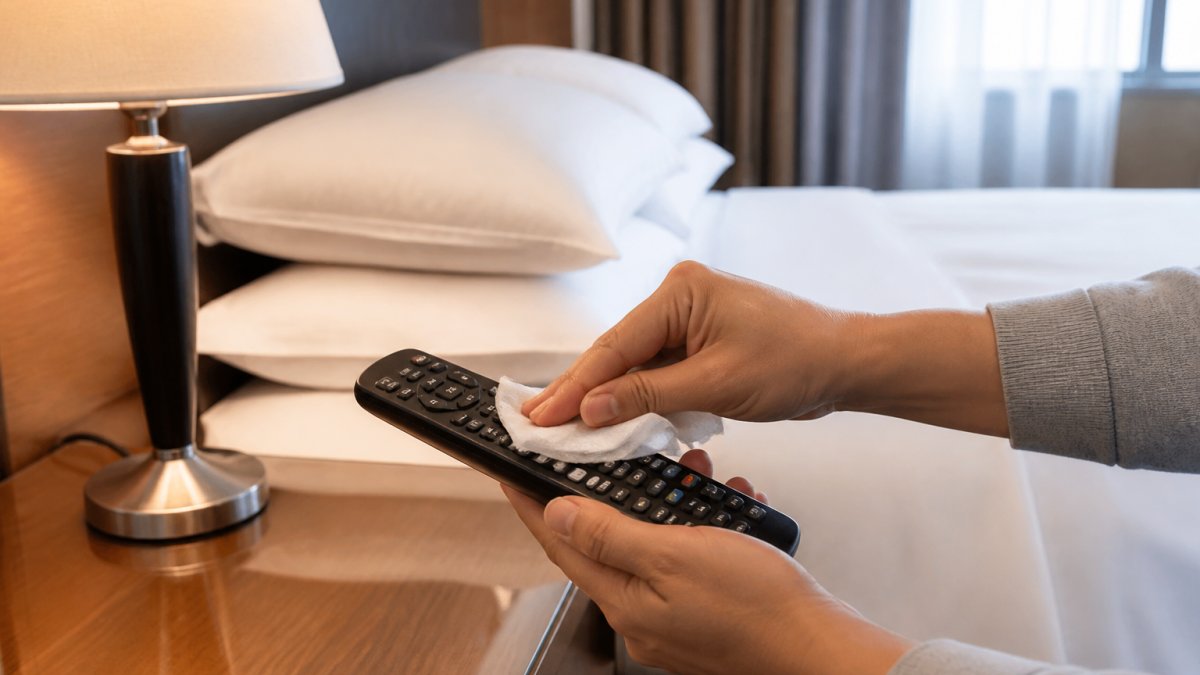
The desk surface is another gathering spot for pathogens. Guests set down luggage, place toiletries, and work on laptops. A quick wipe-down takes seconds and eliminates contact risk.
Best Travel-Sized Disinfectant Wipes and Supplies
Choosing the right sanitization supplies means balancing effectiveness, portability, and safety. Travel-sized options keep your luggage light while still providing adequate protection.
What to pack and why
Disinfectant wipes are the gold standard for hotel room sanitization. They're portable, require no water, and work on most surfaces. Look for wipes containing isopropyl alcohol or quaternary ammonium compounds (quats), both proven antimicrobial agents.
Pack these essentials:
- Disinfectant wipes, 20-30 count travel pack (fits easily in carry-on luggage)
- Small hand sanitizer, for hands after cleaning
- Disposable gloves, latex-free if anyone has sensitivities
- Small trash bag, to contain used wipes and prevent cross-contamination
- Cloth or paper towels, for drying surfaces after sanitization
Consider bringing more wipes than you think you'll need. You may want to sanitize additional surfaces, share supplies with traveling companions, or use extras for unexpected situations. Most travel packs weigh under 4 ounces and fit in a small toiletry bag.
Eco-friendly and non-toxic alternatives
If you prefer natural or non-toxic options, several alternatives work effectively:
White vinegar and water solution, Mix equal parts white vinegar and water in a small spray bottle. Vinegar is antimicrobial and safe around children. The smell dissipates quickly. Spray surfaces and let sit for 30 seconds before wiping.
Hydrogen peroxide wipes, Some brands make travel-sized hydrogen peroxide wipes that break down into water and oxygen, leaving no chemical residue. These work well on most hotel surfaces.
Plant-based disinfectant wipes, Brands using essential oils or plant extracts offer non-toxic options. Check that they're EPA-registered or have antimicrobial testing to confirm effectiveness.
Alcohol-based hand wipes, Standard alcohol wipes (60%+ isopropyl alcohol) work as a backup sanitization method. They're less thorough than dedicated disinfectant wipes but better than nothing.
The trade-off with eco-friendly options is longer dwell time. Natural products may require 1-2 minutes of contact time versus 30 seconds for chemical disinfectants. Plan accordingly.
Step-by-Step Sanitization Protocol
A systematic approach to sanitize hotel room surfaces ensures you cover all critical areas and don't miss contamination hotspots. The process takes 10-15 minutes and should happen shortly after you arrive and settle into your room.
Step 1: Prepare your cleaning supplies and personal protective equipment
Lay out all supplies on the desk or a clean surface. Put on disposable gloves before you begin.
Open your disinfectant wipes and place the trash bag nearby for used wipes. Check that your wipes are moist and haven't dried out during travel. If they have, they won't be effective.
Review the dwell time on your disinfectant product. This is the amount of time the surface must stay wet with disinfectant to kill pathogens effectively. Most require 30 seconds to 3 minutes. Knowing this upfront helps you work efficiently.
Step 2: Start with high-touch surfaces and work systematically
Begin with the remote control. Wipe all surfaces, front, back, sides, and buttons. Don't rush.
Move to light switches. Wipe the plate, frame, and surrounding wall area. Then tackle door handles, both the guest-room door and bathroom door. Wipe thoroughly on both sides.
Continue to the bathroom. Sanitize faucet handles, sink basin, toilet flush handle, and light switch. These surfaces are high-risk zones in any hotel room.
Return to the bedroom. Wipe the nightstands, desk surface, and any other hard surfaces guests commonly touch.
Work top to bottom and front to back so you don't re-contaminate surfaces you've already cleaned.
Step 3: Allow proper dwell time for disinfectants
After wiping, don't immediately touch or use the surface. The disinfectant needs time to work. Check your product instructions for the exact dwell time.
During this waiting period, you can:
- Unpack luggage and settle into the room
- Review hotel information or check emails
- Prepare toiletries and clothing
- Attend to your traveling companions
Respecting dwell time is critical. Cutting it short reduces effectiveness and defeats the purpose of sanitization.
Step 4: Address bedding and soft surfaces
Once hard surfaces are dry, address soft surfaces. Strip the top bedding (comforter or duvet) and fold it to the side.
For pillows, consider placing them in a fresh pillowcase if you've brought extras. If not, place your own pillow from home on top of the hotel pillow, or use a travel pillow.
Some travelers bring a lightweight fabric antimicrobial spray for soft surfaces. Lightly mist upholstered chairs or headboards, allow to air dry, and avoid contact until dry.
For families with young children, this step is especially important. Kids spend significant time on beds and often touch their faces and mouths while resting.
Hotel Room Cleaning Checklist for Travelers
Use this checklist to ensure you've covered all critical surfaces. Print it or save it to your phone before traveling.
| Surface | Cleaned | Dwell Time Complete | Notes |
|---|---|---|---|
| Remote control | ☐ | ☐ | Check buttons and crevices |
| Light switches | ☐ | ☐ | All switches in room |
| Door handles | ☐ | ☐ | Both sides, top and bottom edges |
| Faucet handles | ☐ | ☐ | Bathroom and sink |
| Toilet flush handle | ☐ | ☐ | High-risk zone |
| Nightstands | ☐ | ☐ | Top surface and edges |
| Desk surface | ☐ | ☐ | Where luggage and items sit |
| Headboard | ☐ | ☐ | If accessible |
| Bedding | ☐ | ☐ | Comforter folded aside or replaced |
This checklist keeps you accountable and ensures consistency across multiple hotel stays.
Safety Precautions When Cleaning with Chemicals
Disinfectants are effective at killing pathogens, but they require careful handling. Improper use can cause skin irritation, respiratory issues, or accidental poisoning, particularly concerning when traveling with children or elderly relatives.
Handling disinfectants safely
Always wear disposable gloves when handling disinfectant wipes or sprays. Gloves create a barrier between your skin and the chemical.
Ensure adequate ventilation while cleaning. Open windows and doors to allow air circulation. Disinfectant fumes can accumulate in enclosed spaces, causing headaches or respiratory irritation.
Never mix disinfectants or cleaning products. Combining bleach with ammonia or other chemicals creates toxic fumes. Stick to one product at a time.
Use disinfectants only on surfaces they're designed for. Most wipes work on hard, non-porous surfaces.
Store disinfectant wipes in a sealed container away from direct sunlight. Heat and light can reduce effectiveness and increase evaporation.
Protecting children and sensitive skin
Children have more permeable skin than adults, making them more susceptible to chemical absorption. Minimize their exposure during the sanitization process.
If a child has sensitive skin or eczema, consider using gentler alternatives like diluted vinegar or plant-based wipes.
Wash your hands thoroughly after removing gloves and completing sanitization. Even with gloves, some chemical residue may transfer to your hands.
For elderly relatives or anyone with respiratory sensitivity, ensure excellent ventilation. Disinfectant fumes can trigger asthma, allergies, or other breathing issues (the CDC).
When to Request a Room Change or Report Concerns
Sometimes a hotel room requires more than surface sanitization. Visible dirt, stains, odors, or signs of pest activity warrant a room change.
Request a room change immediately if you notice:
- Visible dirt or stains on surfaces or bedding
- Musty or unpleasant odors
- Signs of mold or mildew
- Pest droppings or evidence of insects
- Broken fixtures or significant wear
- Stains or discoloration on mattress or upholstery
Contact the front desk and explain the issue clearly. Most hotels will move you to a different room without question.
Document concerns with photos if possible. This creates a record and may help if you need to dispute charges or file a complaint later.
For families with young children or immunocompromised travelers, cleanliness standards are non-negotiable.
Hotel room sanitization is one simple step you can take to protect your family while traveling.
Journey Must Haves is designed with travelers like you in mind.
Frequently Asked Questions
What are the most high-touch surfaces in a hotel room that need sanitizing?
Remote controls, light switches, door handles, faucet handles, toilet flush handles, nightstands, and desk surfaces are the primary germ hotspots. These areas experience frequent contact and harbor pathogens longer than other surfaces. Don't overlook the phone, thermostat, and any grab bars. Focusing on these high-touch surfaces first maximizes your sanitization effort and reduces cross-contamination risk during your stay.
How long should disinfectant spray or wipes sit on a surface to be effective?
Most disinfectants require a dwell time of 30 seconds to 10 minutes, depending on the product. Check your disinfectant's label for specific contact time requirements. Quaternary ammonium compounds and isopropyl alcohol-based products typically work faster than others. Allowing the proper dwell time ensures the antimicrobial agents eliminate pathogens effectively rather than just wiping away surface dirt.
What cleaning supplies should I pack for hotel travel?
Travel-sized disinfectant wipes are the most convenient option for hotel rooms. Pack wipes that target high-touch surfaces and bedding. Consider including hand sanitizer, a small spray bottle of disinfectant, and disposable gloves. For families with young children, eco-friendly or non-toxic alternatives reduce exposure to harsh chemicals. Keep supplies in a compact travel kit so they're ready when you arrive at your room.
Is it necessary to sanitize hotel room surfaces?
While hotels maintain housekeeping standards, sanitizing your room adds an extra layer of protection, especially when traveling with children or immunocompromised family members. High-touch surfaces can harbor microbial loads from previous guests and housekeeping staff. A quick sanitization protocol takes 10-15 minutes and provides peace of mind, making it a practical step for health-conscious travelers.