

Travel Tips for Elderly With Walkers: A 2026 Guide
Table of Contents
- Preparing Your Walker for Travel
- TSA Mobility Assistance for Seniors at Airport Security
- Best Travel Walkers for Elderly: Selecting the Right Model
- Packing Strategies for Mobility-Challenged Travelers
- Comfortable Travel Accessories for Seniors: Reducing Fatigue
- Selecting Accessible Accommodations and Managing Physical Fatigue
- Navigating Uneven Terrain and International Accessibility Standards
- Transportation Options and Special Assistance Services
- Frequently Asked Questions
Last Updated: September 19, 2026
Travel tips for elderly with walkers show that using mobility aids doesn't mean giving up independence or adventure. At Journey Must Haves, we help travelers overcome mobility challenges through smart planning and the right gear. This guide covers TSA protocols, walker selection, packing strategies, and accessible accommodations.
Preparing Your Walker for Travel
Your walker is your ticket to mobility on the road. Before you leave, make sure it's ready for the journey ahead.
Walker maintenance before departure
Check your walker one week before travel for loose bolts, worn wheels, and damage. Tighten fasteners, test brakes, and clean the frame and wheels.
Pack a small maintenance kit:
- Allen wrench set (for bolts)
- Spare rubber tips
- Lubricating oil for wheels
- Cleaning cloth
- Duct tape (wrapped around a card to save space)
Document your walker's condition with photos before travel in case of airline damage.
Choosing between rental and bringing your own
Bringing your own walker gives you control and avoids rental delays. Renting avoids airport hassles and damage risk to your equipment.
Consider these factors:
| Factor | Bring Your Own | Rent at Destination |
|---|---|---|
| Control & familiarity | Best option | Limited |
| Damage risk | You bear it | Company bears it |
| Setup time | Minimal | May have delays |
| Cost | Just transport | Daily rental fees |
| Availability | Guaranteed | May sell out |
TSA Mobility Assistance for Seniors at Airport Security
The Transportation Security Administration has specific protocols for travelers with mobility aids. Understanding these rules speeds up your journey through security.
Gate-check protocols for walkers
Gate-check your walker at the boarding gate (easiest option) or take it through security to keep it with you. Never pack it in checked baggage. If screening, TSA may swab for explosive residue, this is routine.
Requesting TSA PreCheck and additional screening accommodations
TSA PreCheck reduces security line time. Apply online (10 minutes), then visit an enrollment center for fingerprinting and interview (under one hour total).
Best Travel Walkers for Elderly: Selecting the Right Model
When considering travel tips for elderly with walkers, remember that not all walkers work equally well for travel. The right choice depends on your strength, the terrain you'll encounter, and your luggage needs.
Lightweight rollators versus standard walkers
Lightweight rollators (8-12 lbs) are ideal for travel, easier to maneuver and offer a seat for rest. Standard walkers (20+ lbs) provide more stability on uneven terrain. Choose rollators for most travel; standard walkers for cobblestone streets and rough ground.
Compact designs for airplane aisles and narrow spaces
Choose rollators that fold to 30 inches wide or less for airplane aisles. Compact models fit overhead bins or gate-check easily. Test any walker before buying to ensure comfortable height and easy folding, especially if you have limited hand strength.
Packing Strategies for Mobility-Challenged Travelers
What you pack and how you pack it directly affects your comfort and independence while traveling.
Ultra-light luggage and carry-on restrictions
Aim for 15-20 pounds total luggage weight. Use wheeled luggage with multi-height handles. Keep carry-on under 10 pounds. Pack one week of clothing, medications, chargers, and toiletries. Leave behind extra shoes, heavy books, and unnecessary items.
Organizing essentials for easy access during travel
Use compression bags to reduce clothing volume by 50%. Organize items into pouches: medications, toiletries, electronics, and documents. Keep a small backpack for day trips to free your hands for your walker.
Comfortable Travel Accessories for Seniors: Reducing Fatigue
Physical fatigue is a real challenge when traveling with mobility limitations. The right accessories make a significant difference.
Footwear and walking shoes for extended periods
Choose shoes with arch support, cushioned soles, wide toe box, breathable material, and non-slip soles. Journey Must Haves offers Women's Arch Support Wide Width Walking Sneakers in sizes 6-11. Break in new shoes at home and pack a second pair to rotate and prevent foot fatigue.

Travel pillows and seat cushions for pain relief
Long flights and car rides strain your back and neck. A good travel pillow supports your neck and prevents stiffness. A seat cushion reduces pressure on your lower back and hips.
Selecting Accessible Accommodations and Managing Physical Fatigue
Where you stay affects how much you can do each day. The right accommodation reduces fatigue and lets you enjoy your trip.
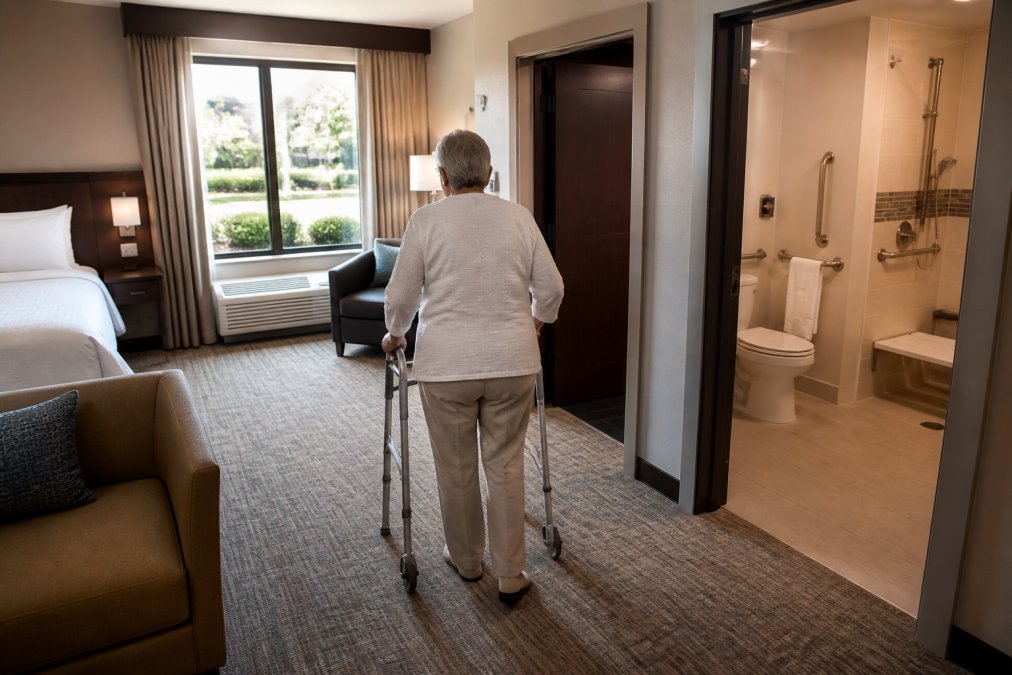
Ground-floor rooms, grab bars, and elevator access
Always book ground-floor rooms or rooms close to elevators. Climbing stairs when you're tired and using a walker is dangerous. Ground-floor access means you can get to your room without extra exertion.
When booking, specifically request:
- Ground-floor room (or first floor)
- Room near the elevator
- Accessible bathroom with grab bars
- Wide doorways (at least 32 inches)
- Room with accessible furniture layout
Itinerary pacing and stamina management strategies
Plan rest days into your itinerary. Don't try to see everything every day. One major activity per day is reasonable for travelers with mobility challenges.
Break activities into smaller chunks:
- Morning: Visit one museum or attraction
- Lunch: Rest at the hotel or a café
- Afternoon: Light activity like a short walk or shopping
- Evening: Dinner and relaxation
Navigating Uneven Terrain and International Accessibility Standards
Not every destination has smooth, accessible surfaces. Understanding how to handle challenging terrain keeps you safe and confident.
Cobblestone streets and challenging walking surfaces
Cobblestone streets are common in Europe and older cities. They're beautiful but difficult for walkers. Uneven surfaces require more balance and effort.
Techniques for cobblestone streets:
- Move slowly and deliberately
- Keep your walker close to your body
- Look ahead for the smoothest path
- Use your walker to test stability before stepping
- Take frequent breaks
- Consider a taxi or rideshare for longer distances
ADA compliance and international accessibility differences
The Americans with Disabilities Act requires accessibility in the United States (ADA Standards for Accessible Design). Ramps, elevators, accessible bathrooms, and level surfaces are standard. Most US hotels, attractions, and transportation meet ADA standards.
Research your destination's accessibility before booking. Look for:
- Hotels with accessible rooms
- Attractions with wheelchair/walker access
- Public transportation options
- Accessible restaurants and shops
Transportation Options and Special Assistance Services
Getting around your destination is easier when you know your options and how to request help.
Buses, taxis, trains, and airport transfer logistics
Most cities offer accessible public transportation. Buses have lifts or ramps for walkers and wheelchairs. Trains often have elevators and accessible cars. Ask about these features when planning your route.
Requesting wheelchair assistance and travel companions
Airlines provide free wheelchair assistance at airports. Request this service when you book your flight. You'll be met at the gate with a wheelchair and an agent who helps you navigate the airport.
Travel with a companion if possible. A travel companion can:
- Help with luggage
- Assist if you fall or get tired
- Navigate unfamiliar areas
- Help with medical needs
- Provide emotional support
Frequently Asked Questions
Are walkers allowed through TSA security checkpoints?
Yes, walkers are permitted through TSA security. You can bring your walker to the checkpoint and use it to walk through the metal detector. If your walker has metal components that trigger the alarm, inform the TSA officer and they will conduct additional screening. Most walkers are allowed through without issue. Always notify security staff that you use a mobility aid so they can provide appropriate assistance.
What are the best travel walkers for elderly travelers?
Lightweight rollators weighing under 10 pounds are ideal for travel. Look for models with compact folding designs that fit airline overhead bins or gate-check requirements. Rollators with seats provide rest options during layovers. Choose walkers with sturdy wheels suitable for various surfaces, including airport floors and outdoor terrain. Ensure the walker has comfortable handles and is easy to maneuver in tight airplane aisles and hotel hallways.
How do you request TSA mobility assistance at the airport?
Inform the TSA officer at the checkpoint that you need mobility assistance. You can request a wheelchair escort, priority screening, or additional time to move through security. TSA agents are trained to accommodate elderly travelers with mobility issues. Consider applying for TSA PreCheck if you travel frequently, it allows you to keep your shoes and light jacket on during screening, reducing physical strain. Arrive early to allow extra time without rushing.
What comfortable travel accessories should seniors bring to reduce fatigue?
Invest in supportive walking shoes with arch support and cushioning to reduce foot pain during extended periods of walking. Travel pillows help prevent neck strain during flights and layovers. Compression socks improve circulation and reduce swelling during air travel. Seat cushions provide relief during long flights or bus rides. The Women's Arch Support Wide Width Walking Sneakers ($62.15) offer memory foam insoles and breathable mesh, ideal for all-day wear. Pair these with quality travel accessories to manage physical fatigue effectively.
Traveling with a walker is absolutely possible. It requires planning, the right gear, and realistic expectations about pacing. Journey Must Haves offers travel essentials designed specifically for mobility-challenged travelers. From comfortable walking shoes to lightweight luggage, our collections help you travel with confidence. Explore Our Collections and discover how the right gear transforms your travel experience.