

Travel Comfort Gear for Elderly Parents: 2026 Guide
Table of Contents
- Essential Travel Comfort Gear for Elderly Parents
- TSA Screening Procedures for Seniors: What to Expect
- Best Travel Gear for Elderly Mobility: A Comparison
- Long-Haul Flight Comfort Tips for Seniors
- Medication Management and Accessibility-Focused Travel Planning
- Post-Travel Recovery Gear and Packing Checklist
- Conclusion: Helping Elderly Parents Travel with Confidence
- Frequently Asked Questions
Last Updated: September 14, 2026

Essential Travel Comfort Gear for Elderly Parents
Travel comfort gear for elderly parents is the category of mobility aids, support products, and health-management items that keep older travelers steady, rested, and independent on the road. At Journey Must Haves, our catalog is thoughtfully curated to enhance comfort and convenience for every adventurer. The items below are the ones that actually change how a trip feels.
Start with three categories, because they solve the majority of travel-day problems:
- Mobility aids: foldable canes, lightweight walkers, and wheelchair protection that survives baggage handling
- Joint and circulation support: compression socks with graduated pressure, knee supports, and orthopedic insoles
- Comfort and temperature regulation: travel pillows, breathable fabrics, and layered clothing
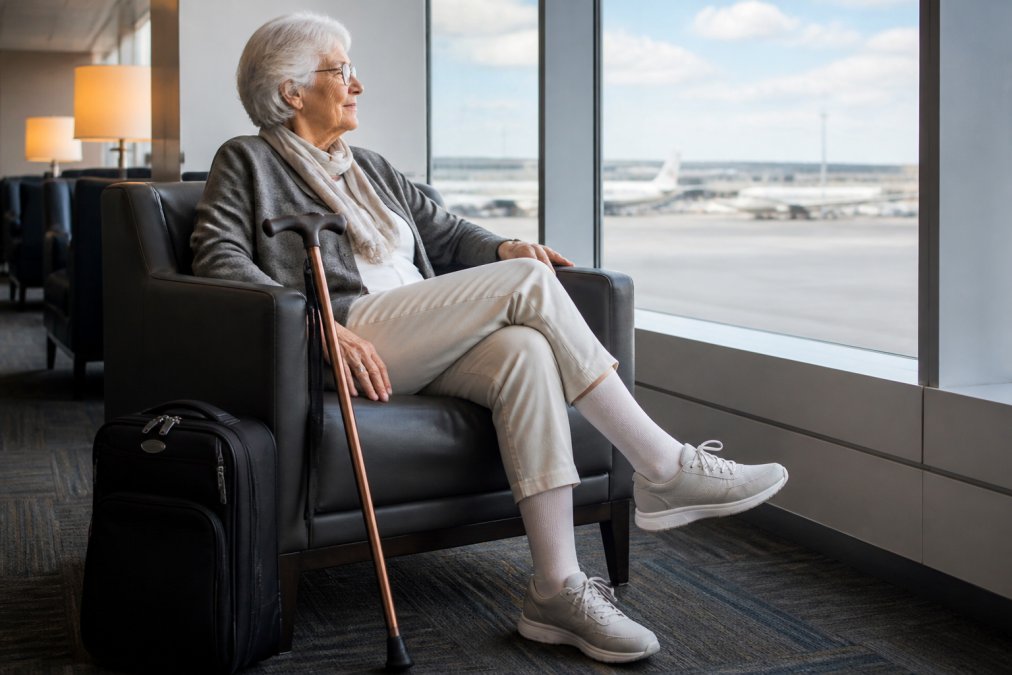
Mobility Aids: Foldable Canes, Walkers, and Wheelchair Protection
A foldable cane can be a useful upgrade for a parent who needs occasional support. It collapses into a carry-on, weighs almost nothing, and turns a long airport walk into a manageable one. Pair it with a shoe horn and a luggage scale so they aren't bending or guessing at the check-in counter.
Wheelchair protection matters more than most families expect. A padded transport bag and removed, separately bagged footrests prevent the scuffs and bent frames that show up after a flight. Airlines handle thousands of mobility devices a day, and damage claims are common enough that the DOT air travel disability complaint process exists specifically for them. Photograph the chair before check-in. It takes thirty seconds and settles most disputes.
Joint Support and Compression Gear for Circulation
Compression socks with graduated pressure are a valuable item for many travelers. Graduated pressure means the sock is tightest at the ankle and loosest at the calf, which helps blood move upward instead of pooling during long periods of sitting.
For arthritis in the hips and back, the honest answer is that no travel pillow fixes joint disease. What they do is reduce the compounding fatigue that makes pain worse by hour six of a flight. A supportive seat cushion and a properly fitted travel pillow keep the spine closer to neutral, which means less stiffness on arrival. Orthopedic insoles add another layer, and they're the cheapest way to test whether arch support helps before investing in new shoes.

TSA Screening Procedures for Seniors: What to Expect
Seniors can keep their shoes and light jacket on at most security checkpoints, and travelers 75 and older are not required to remove shoes at all. That said, the smoother path is preparation, not exemption. Here's what actually speeds things up.
Medical Equipment and Medication Rules at Security
Medically necessary liquids, gels, and aerosols are exempt from the 3.4-ounce limit, but they must be declared to the officer at the start of screening. That includes insulin, eye drops, and prescription creams. Solid medications, pills, and supplements travel normally in carry-on or checked bags.
The TSA guidance on traveling with medical conditions confirms that mobility aids, canes, walkers, and wheelchairs go through the screening process with the traveler, and that a companion or caregiver may accompany a senior through security with a gate pass arranged at the airline counter. Ask for a private screening if your parent uses a medical device they'd rather not discuss in line. Officers are required to accommodate that request.
Keep medications in original labeled containers. It isn't a legal requirement for domestic travel, but it prevents questions and protects your parent if a prescription needs verifying mid-trip.
Best Travel Gear for Elderly Mobility: A Comparison
The best travel gear for elderly mobility depends on how far your parent can walk unaided. Match the aid to the distance, not to a product category. A cane for airport concourses, a walker for full travel days, and an insole for everything in between.
| Gear | Typical Price | Best For | Key Feature |
|---|---|---|---|
| Foldable cane | Budget tier | Occasional support, tight spaces | Collapses into carry-on |
| Orthopedic sport insoles | $14.05 | Flat feet, high arches, long walks | 35mm semi-rigid arch support |
| Compression socks | Budget tier | Flights over 3 hours | Graduated pressure |
| Diabetic footwear | $44.85 | Swollen feet, neuropathy | Memory foam insole, zero-drop build |
| Arch support walking sneakers | $62.15 | All-day walking, plantar fasciitis | Wide toe box, orthotic insole included |
| Electric heating knee massager | $80.99 | Post-travel joint stiffness | 2400mAh cordless, heat plus vibration |
| GPS tracker | $24.99 | Wandering risk, crowded venues | 7g unit, 7-day history, iOS and Android |

Pricing Breakdown: Budget vs. Premium Options
Budget tier covers the essentials: insoles, compression socks, a foldable cane. Most families can assemble a complete travel kit for under $100 at this level.
Premium tier is where independence gets easier. The arch support walking sneakers at $62.15 and the diabetic footwear at $44.85 address the two conditions that most often end a walking day early, plantar fasciitis and swollen feet. The heating knee massager at $80.99 can be a beneficial item for post-travel joint stiffness.
Where it falls short: none of this replaces a properly fitted wheelchair or prescribed orthotic. If your parent needs those, buy those first and treat this as the comfort layer on top.
Long-Haul Flight Comfort Tips for Seniors
Long-haul flight comfort for seniors comes down to four controllable variables: seat choice, temperature, hydration, and movement. Get those right and jet lag prevention becomes far more realistic.
Seat selection is the first comfort decision. An aisle seat lets your parent stand, stretch, and reach the restroom without climbing over strangers, worth paying for on any flight over four hours. Bulkhead seats offer more legroom but often have fixed armrests and no under-seat storage, which can be a trade-off if your parent needs to keep medication or a cane within reach. Exit rows have more space but come with restrictions and a responsibility to assist in an emergency, so they're usually a poor fit. If your parent uses a wheelchair or walker, ask the airline to block the adjacent seat for a companion when possible.
Temperature regulation. Cabin air is dry and often cold, and body temperature regulation gets less efficient with age. Breathable fabrics in layers beat a single heavy jacket, because your parent can adjust without getting up. A travel pillow that supports the neck rather than the chin prevents the head-drop that causes stiffness. A light scarf or wrap doubles as a blanket and packs flat.
Hydration. This is the most commonly botched item. Cabin humidity is low, and the thirst response weakens with age, so your parent may not feel thirsty while still becoming dehydrated. Caffeine and alcohol both work against hydration, so plan water and electrolyte packets instead, and set a reminder to drink every hour. An empty refillable bottle gets through security and can be filled at a fountain past the checkpoint.
Movement. Sitting still for hours is the single biggest avoidable risk on a long-haul flight. Aisle seats, ankle circles, and a short walk every two hours reduce travel fatigue and support circulation. Compression socks do part of this work, but they don't replace standing up. Set a phone alarm for every two hours as a prompt, it's easy to lose track of time in flight.
Jet lag prevention. Arriving at a destination in daylight and getting outside helps reset the body clock faster than napping on arrival. Shift bedtime gradually toward the destination's schedule in the two or three days before departure, and keep meals on the destination's clock once in the air. These are small adjustments, but they compound over a multi-day trip.
Medication Management and Accessibility-Focused Travel Planning
Medication management is an important aspect of travel planning. A seven-day pill organizer with individual compartments beats a single bottle, because it makes a missed dose visible.
Carry all medication in carry-on, never checked. Pack twice the trip duration for anything critical, and keep a written list of drug names, dosages, and prescriber contact details separate from the pills. For accessibility planning, request wheelchair assistance when you book rather than at the airport, and confirm it again 72 hours before departure. The CDC guidance for travelers with disabilities recommends reviewing vaccination and health requirements well ahead of the trip, particularly for international destinations.
A GPS tracker at $24.99 is worth considering for a parent with any wandering risk. It weighs 7 grams, works with both iOS and Android, and stores a week of location history.
Post-Travel Recovery Gear and Packing Checklist
Post-travel recovery is an important phase to consider. Building in a rest day after arrival, along with heat therapy on the knees and ankles, elevation for the feet, and a full night's sleep, can be beneficial.
Use this checklist before you leave:
- Foldable cane or walker, labeled with contact details
- Compression socks, two pairs minimum
- Orthopedic insoles, broken in before the trip
- Supportive walking shoes with a wide toe box
- Seven-day medication organizer, plus backup supply in carry-on
- Written medication list and prescriber contacts
- Electrolyte packets and an empty refillable bottle
- Travel pillow and seat cushion
- Wheelchair or walker photographed and padded for check-in
- GPS tracker charged and paired
- Airline assistance confirmed 72 hours before departure
- Portable power bank for devices
Conclusion: Helping Elderly Parents Travel with Confidence
The conversation about travel needs can sometimes be challenging. Frame every purchase around independence, not limitation, and involve them in choosing the cane or the shoes.

Journey Must Haves curates travel essentials specifically for people working around physical limitations, from orthopedic insoles and arch support walking sneakers to compression support and cordless heating therapy. Each item is selected to keep travelers moving rather than sitting trips out.
Explore Our Collections and build a kit around your parent's actual needs, not a generic packing list.
Frequently Asked Questions
What are some good travel accessories for elderly people?
Prioritize mobility aids like foldable canes and walkers, compression socks for circulation support, and orthopedic footwear. Add a portable power bank, electrolyte packets for hydration, and a medication organizer. A travel pillow with ergonomic design and a lightweight luggage scale also help. These items address joint support, temperature regulation, and travel fatigue, making the trip more manageable for seniors with conditions like arthritis or plantar fasciitis.
What are the TSA rules for seniors over 70?
Travelers 75 and older can leave shoes and light jackets on during screening. Those with medical devices, mobility aids, or implanted hardware can request alternative screening instead of walking through the metal detector. Medications in pill form are allowed in any quantity, and liquid medications are exempt from the 3-1-1 rule but should be declared. Always inform the TSA officer about mobility equipment before the checkpoint.
How can I make long-haul flights more comfortable for elderly parents?
Book aisle seats for easier movement, and encourage walking every hour to support circulation. Compression socks with graduated pressure reduce swelling, while a memory foam travel pillow helps with neck support. Pack electrolyte packets to maintain hydration and set a watch to the destination time zone to reduce jet lag. Lightweight, breathable fabrics help with temperature regulation during the flight.
What medical documentation should elderly travelers carry?
Carry a list of current medications with dosages, a letter from the prescribing doctor explaining any medical devices or implants, and insurance cards. If traveling internationally, bring a copy of prescriptions and a medical alert card. Keep these in a medication organizer or carry-on essentials bag that stays with the senior at all times. This documentation helps with TSA screening and any medical needs abroad.
What is the best way to travel with elderly parents who have mobility limitations?
Plan around accessibility from booking to arrival. Request wheelchair assistance at airports, choose hotels with grab bars and step-free access, and pack lightweight luggage that is easy to maneuver. Bring a foldable cane or walker, and consider a GPS tracker for personal security. Build extra time into every transition to reduce travel fatigue, and involve your parent in decisions to maintain their independence and confidence.