

Secure Travel Wallets for International Trips: A Buyer's Guide
Table of Contents
- What Makes a Travel Wallet Secure for International Trips
- RFID-Blocking Travel Wallets: What You Actually Need to Know
- Anti-Theft Travel Wallet Features That Matter
- Travel Wallet with Passport Holder: Organization and Security Combined
- Neck Wallet for Travel: Weighing Comfort Against Visibility
- Choosing the Right Wallet Style for Your Travel Needs
- Common Mistakes That Compromise Wallet Security
- Practical International Payment and Document Strategy
- Frequently Asked Questions
Last Updated: October 9, 2026
What Makes a Travel Wallet Secure for International Trips
A secure travel wallet combines physical design, smart carrying strategy, and compartmentalization to protect your documents and cash across borders.
The best secure travel wallets for international trips balance accessibility with protection: quick access to your passport at customs, but no easy reach for pickpockets. This tension defines every wallet choice you'll make.
Physical security starts with where you carry your wallet and how it's designed. A front pocket is harder to steal from than a back pocket, and divided compartments mean a thief who grabs one section doesn't get everything.
Physical security vs. digital protection
Your secure travel wallet protects against two threats: physical theft and digital skimming. Physical theft is straightforward, someone takes your wallet.
Most wallet security discussions focus on physical theft because it's more common. Digital skimming is possible but requires specific equipment and proximity, making it less frequent than traditional theft.
Understanding both threats helps you choose the right wallet. In areas with high pickpocketing rates, prioritize physical security features; if digital theft concerns you, look for RFID-blocking materials. Many travelers benefit from a wallet that addresses both.
Carrying location and access patterns
Where you carry your wallet changes everything about security. A front pants pocket is visible but harder to access unnoticed. A crossbody bag worn under your jacket is hidden but slower to access at borders or restaurants.
Your carrying location should match your trip style. Moving between hotels and tourist sites? A front pocket or small crossbody bag works well. Traveling with young children or managing mobility challenges? Accessibility matters more than maximum concealment, since a wallet that's too hard to reach becomes a liability.
RFID-Blocking Travel Wallets: What You Actually Need to Know
RFID-blocking technology creates a barrier that prevents wireless readers from capturing data off your credit cards. It's real protection against a real threat, but the threat is smaller than marketing suggests.
How RFID skimming works and realistic risk assessment
RFID skimming uses a handheld reader to wirelessly capture data stored on your card's chip.
The risk is real but limited. RFID skimming requires proximity, specific equipment, and know-how, making it far less common than pickpocketing or shoulder surfing. In most developed countries it's rare; in developing countries, pickpocketing poses a much larger threat.
Banks also limit the damage. Most U.S. credit cards have fraud protection covering unauthorized charges, so if someone skims your card and makes a purchase, you typically aren't liable. RFID skimming is an inconvenience and a privacy violation, but not catastrophic.
When RFID blocking makes sense for your trip
RFID-blocking wallets make sense if you're traveling to areas known for organized credit card fraud, carrying multiple high-value cards, or if the peace of mind is worth the cost. They make less sense for domestic travel or destinations where pickpocketing is the primary theft concern.
A practical approach: carry one RFID-blocking wallet for your primary credit cards and keep a backup card in a separate, non-blocked location. This protects against both RFID skimming and a lost or stolen main wallet.
Anti-Theft Travel Wallet Features That Matter
Anti-theft design focuses on making your wallet harder to steal and making theft immediately obvious.
Pickpocket-resistant design and placement
Pickpockets succeed by accessing your wallet without you noticing.
Divided compartments add another layer: if a thief accesses your wallet, they can't grab all your cash at once. Separate sections for cards, cash, and documents mean losing one section doesn't mean losing everything.
Secure closures matter more than you'd think. A zipper takes longer to open than a snap or velcro, and a locking mechanism is even more resistant. Those extra seconds matter, since pickpockets work quickly and move on if access takes too long.
Secure closures and divided compartments
The best secure travel wallets use multiple compartments with distinct closures: one for your passport and travel documents, one for cash in local currency, one for backup cards.
Zippered pockets are standard for secure travel wallets, faster than buttons or snaps but more secure than open compartments. Some use locking zippers that require a small key.
Wristlet-style handles give you something to grip, making it harder for a thief to snatch the wallet from your hand. Crossbody straps that can't be easily cut are common on travel wallets built for high-risk environments.
Travel Wallet with Passport Holder: Organization and Security Combined
A travel wallet that includes a dedicated passport holder keeps your most important document organized and protected.
Keeping documents organized and accessible
Your passport is the document you need most frequently when traveling internationally, at borders, hotels, rental car counters, and occasionally at restaurants or shops.
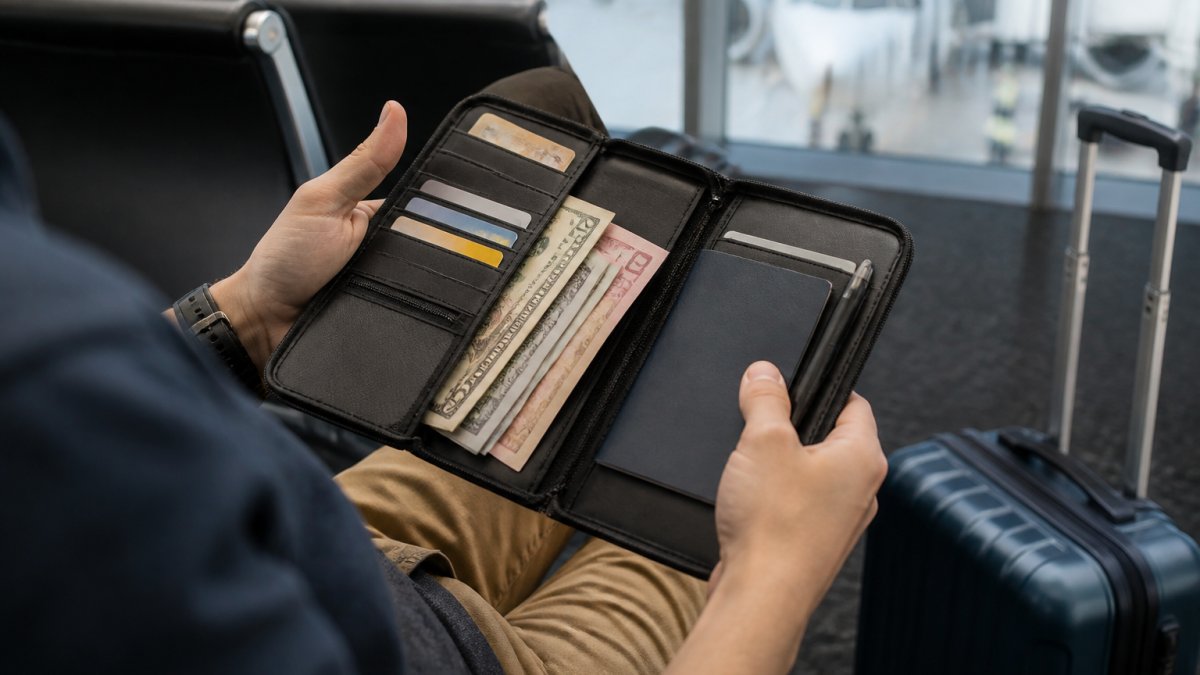
The best secure travel wallets with passport holders use a dedicated slot that holds your passport flat and prevents bending, keeping it separate from your cash and cards so you can access one without exposing the others.
Some travelers prefer a separate passport holder worn around the neck or in a hidden pouch; others prefer an integrated design.
Document protection across different trip types
A weekend trip requires different document organization than a month-long journey. For short trips, you might carry only your passport and one credit card. For extended travel, you'll carry backup cards, passport copies, travel insurance documents, and possibly vaccination records.
A secure travel wallet for international trips should have enough compartments to organize these documents without becoming bulky. Waterproof materials protect against spills and weather, and a slim design keeps the wallet comfortable under clothing or in a crossbody bag.
Neck Wallet for Travel: Weighing Comfort Against Visibility
A neck wallet sits under your clothing, completely hidden from pickpockets. It's one of the most secure carrying options available, but it comes with trade-offs.
When hidden storage makes sense
Neck wallets make sense in areas with very high theft rates, if you're carrying a large amount of cash, or if you're traveling alone and want maximum security. They're also practical if you're moving between accommodations frequently and want your passport and documents with you at all times.
The hidden nature of a neck wallet means a thief can't see it, target it, or access it without you noticing. That's powerful security, and why neck wallets are popular in developing countries and high-crime urban areas.
Accessibility and comfort considerations
The main drawback of a neck wallet is accessibility. You can't quickly reach your passport at a border or grab cash without stopping to retrieve it from under your clothing, making neck wallets impractical for frequent access.
Comfort is another consideration. A neck wallet worn under your shirt creates bulk and heat, especially in warm climates, and the weight around your neck can become uncomfortable. If you have neck or shoulder pain, it might not be the best choice.
Choosing the Right Wallet Style for Your Travel Needs
Different wallet styles serve different purposes. Understanding the trade-offs helps you choose the right one for your trip.
Slim and minimalist designs for everyday carry
A slim wallet minimizes bulk and fits easily in a front pocket or small crossbody bag, typically holding a passport, a few cards, and some cash. Slim wallets suit day trips, short vacations, or travelers who carry minimal items.
The trade-off is organization: fewer compartments mean cards and cash are more likely to mix together, and less material means less RFID protection.
Minimalist wallets appeal to travelers who value speed and simplicity: quick access, no bulk under clothing, and less chance of losing a small wallet because you know exactly where it is.
Full-featured wallets for extended international travel
A full-featured wallet has multiple compartments, dedicated passport storage, RFID blocking, and secure closures. It's heavier and bulkier than a slim wallet but offers better organization and more security features.
Full-featured wallets suit extended trips with multiple cards, backup documents, and cash in different currencies, and travelers who want maximum organization and don't mind a slightly larger item.
The best secure travel wallets for international trips lasting more than a week typically fall into this category, with room for your passport, travel documents, cards, coins, and cash in different sections organized by currency or document type.
Material durability and water resistance
Leather wallets are classic and durable but require maintenance and can be damaged by water. Synthetic materials are often more water-resistant and need less care, and some wallets combine a leather exterior with a synthetic lining.
Water resistance matters in tropical climates, near water, or simply for spill protection, keeping your documents and cards safe from damage.
Durability matters over the life of your wallet: quality materials last years, while a cheap wallet might fail mid-trip. Look for reinforced stitching, quality zippers, and materials that handle wear and tear.
Common Mistakes That Compromise Wallet Security
Understanding what not to do is as important as understanding what to do.
Carrying your wallet in a back pocket is the most common mistake. It's visible, accessible, and the first place a pickpocket looks. Front pockets and crossbody bags are significantly more secure.
Keeping all your valuables in one place is another mistake: if your wallet is lost or stolen, you lose everything.
Neglecting to check your wallet regularly is a mistake. A secure travel wallet only works if you notice immediately when something's missing, so check it at least once daily to confirm all documents and cards are present.
Practical International Payment and Document Strategy
Your secure travel wallet is part of a larger strategy for managing money and documents while traveling internationally.
Carry cash in the local currency, but not all of it.
Carry at least two credit cards from different banks if possible, so a lost or stolen card doesn't cut off your funds.
Make copies of your passport, travel insurance documents, and important contact numbers.
Keep your passport separate from your daily cash and cards.
Understand the exchange rates and payment methods in your destination.
Traveling internationally requires balancing security with accessibility, and the right secure travel wallet is the foundation.
Frequently Asked Questions
What features should I look for in a secure travel wallet for international trips?
Prioritize wallets with secure closures (zippers or snaps), divided compartments for organizing cash and cards, and RFID blocking if you carry contactless cards. Look for durable materials that resist wear and water damage. A dedicated passport slot or document organizer reduces fumbling in public. Consider where you'll carry it, front pockets, cross-body straps, or neck wallets offer better security than back pockets. Test the wallet's weight and bulk before traveling; comfort affects how consistently you use it.
Do RFID-blocking travel wallets actually protect your credit cards?
RFID blocking reduces the theoretical risk of remote card scanning, but the practical threat is limited. Most card issuers now include fraud protection that covers unauthorized contactless charges. RFID blocking adds minimal cost and weight, so it's a reasonable precaution for international travel where you may use unfamiliar payment systems. However, physical security, keeping your wallet secure and away from pickpockets, matters far more than RFID protection for preventing travel fraud.
Is a neck wallet or money belt safer than a regular travel wallet?
Neck wallets and money belts hide valuables under clothing, making them less visible to pickpockets. This works well for high-risk urban areas or crowded transit. The trade-off is accessibility: you'll need to pull it out in public to access cash or cards, which can draw attention. For most international travelers, a secure cross-body wallet or front-pocket carry offers a better balance of safety and convenience. Choose hidden storage if you're visiting areas with high pickpocketing rates; otherwise, prioritize ease of use.
What should you keep in a travel wallet, and what should you leave behind?
Carry one primary credit card, a backup card from a different issuer, your passport or ID, and enough local currency for immediate needs. Leave behind: original documents (store copies separately), excessive cash, jewelry, and multiple loyalty cards. Spread valuables across your person, main wallet, hidden backup, hotel safe, so a single theft doesn't leave you stranded. For extended international trips, keep card issuer phone numbers and your bank's travel notification number written separately from your wallet.