

Best Travel Aids for Hip Arthritis: 7 Comfort Picks
Table of Contents
- Quick Comparison: Top Travel Aids for Hip Arthritis
- How Hip Arthritis Changes the Way You Travel
- Travel Seat Cushions for Hip Pain: Pressure Relief on the Go
- TSA Guidelines for Medical Devices: What to Know Before Security
- Exercises for Hip Pain During Travel: Simple Moves to Keep Joints Loose
- Orthopedic Support for Feet and Ankles: The Foundation of Hip Comfort
- Thermal Therapy on the Road: Heat and Cold for Joint Stiffness
- Weight and Portability Logistics: Packing Smart for Mobility Limitations
- Frequently Asked Questions
Last Updated: September 17, 2026
Quick Comparison: Top Travel Aids for Hip Arthritis
The best travel aids for hip arthritis are the ones that reduce load on the joint at every stage of the trip, not just during the flight. At Journey Must Haves, we curate travel gear built to overcome physical and logistical limits, and this guide covers the seven picks that do the most work for arthritic hips: a memory foam seat cushion, a portable heating and vibration massager, orthopedic insoles, supportive footwear, and a few non-obvious additions most guides skip.
Hip arthritis makes every step a weight-bearing decision. Cartilage that has thinned no longer absorbs impact the way it once did, so jarring from a curb, a long terminal walk, or a hard plastic seat travels straight into the joint. The right travel aids for hip arthritis interrupt that chain: cushioning under the pelvis, support under the arch, warmth into stiff tissue, and a plan for getting through security without a scene.
Below, we'll show you exactly which aids earn their space in a carry-on, what the TSA actually requires for medical devices, and a short exercise routine that keeps hips from locking up mid-journey.
| Travel Aid | What It Does | Best For | Journey Must Haves Pick |
|---|---|---|---|
| Seat cushion | Pressure relief under hips and tailbone | Long flights, car rides | Ergonomic Memory Foam Seat Cushion |
| Portable massager | Heat plus vibration for stiffness | Evening recovery, cold hotel rooms | Electric Heating Knee Massager |
| Orthopedic insoles | Arch support, impact reduction | All-day walking, airports | Orthopedic Sport Insoles |
| Supportive footwear | Wide toe box, cushioned outsole | Transit days, sightseeing | Women's Arch Support Walking Sneakers |
| Compression wrap | Warmth and heel/arch support | Post-flight swelling | Plantar Fasciitis Therapy Wrap |
How Hip Arthritis Changes the Way You Travel
Travel compresses a normal day's joint stress into a few hours. Airport terminals routinely require a mile or more of walking, cabin seats hold the hip flexed at an angle that stiffens an arthritic joint, and cabin pressure changes can make soft tissue swell. The result is a familiar pattern: you arrive at your destination feeling worse than when you left.

The fix is not one product. It is stacking small interventions so no single stage of the trip overloads the hip. Cushion the seat, support the arch, keep the joint warm, and move it deliberately every hour. That combination is what separates pain-free travel from a trip you spend recovering from.
Travel Seat Cushions for Hip Pain: Pressure Relief on the Go
Travel seat cushions for hip pain work by redistributing pressure away from the hip and tailbone and into the thighs, where the body tolerates load far better. A good cushion is the single highest-impact item on this list because it addresses the longest sustained stress of any trip: hours of sitting.
The Ergonomic Memory Foam Seat Cushion uses slow-rebound memory foam with a breathable mesh cover, sized at 46 by 43 by 12 centimeters and available in six colors. The slow rebound matters more than the thickness. It lets the foam mold around the ischial tuberosities, the sit bones, rather than fighting them, which keeps the pelvis level and reduces the sideways tilt that aggravates hip joint support.
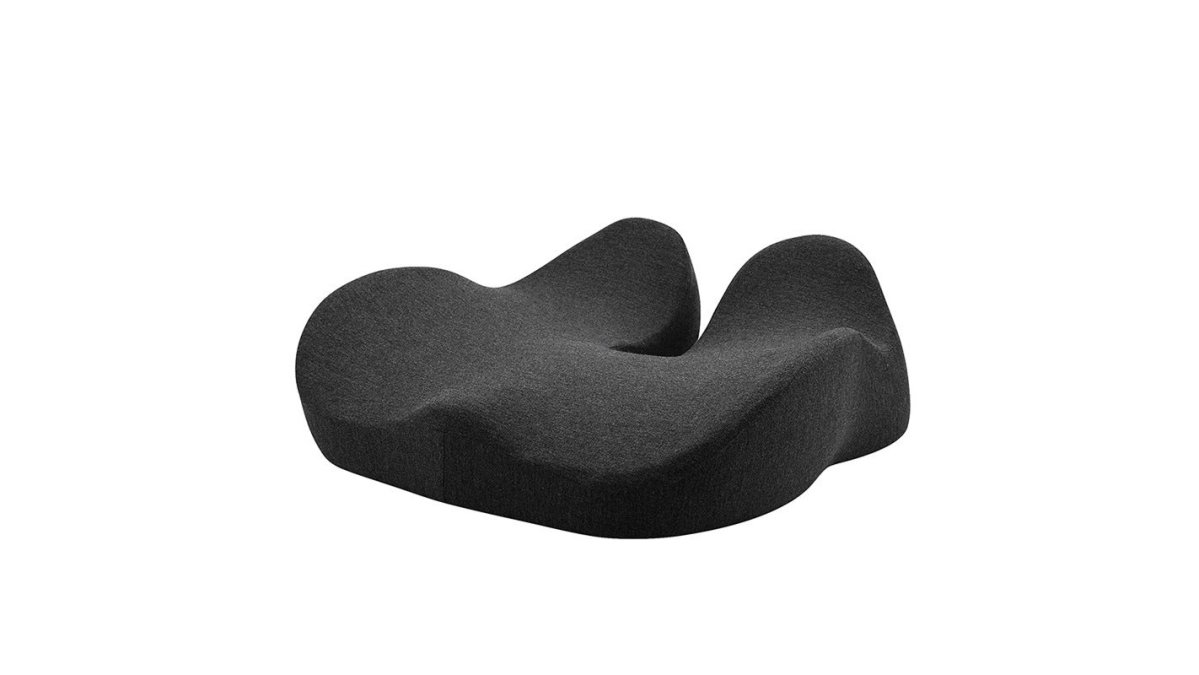
A common mistake is buying a cushion that is too thick for an airplane seat. Anything over roughly 5 centimeters changes your seated height enough to press the thighs against the tray table and cut off circulation. Test any cushion at your kitchen table for two hours before you fly with it.
TSA Guidelines for Medical Devices: What to Know Before Security
TSA guidelines for medical devices are more permissive than most travelers assume. Mobility aids, orthopedic supports, and therapeutic devices are permitted through screening, and you may request a private screening rather than a pat-down in public view. You are not required to remove a brace or support if removing it would be painful or medically inadvisable; tell the officer before screening begins.
Assistive devices and mobility aids generally go through the X-ray with your other belongings unless they cannot fit or cannot be lifted onto the belt, in which case officers screen them manually.
Step into Comfort: Women's Arch Support →
Exercises for Hip Pain During Travel: Simple Moves to Keep Joints Loose
Exercises for hip pain during travel are less about building strength and more about interrupting stiffness before it sets. Sitting still for two hours lets synovial fluid stagnate and the hip capsule tighten, which is why the first ten steps after a flight hurt more than the last ten before it.
- Ankle pumps. Point and flex each foot ten times. This drives circulation through the calf and reduces the swelling that stiffens the whole leg.
- Seated hip march. Lift one knee toward your chest as far as the seat allows, hold two seconds, lower. Ten per side.
- Knee extensions. Straighten one leg until the knee locks, hold five seconds, lower slowly. This opens the front of the hip.
- Seated glute squeeze. Squeeze both glutes for five seconds, release, repeat ten times. It stabilizes the pelvis without loading the joint.
- Gentle hip circles. With feet flat, draw small circles with your knees, five in each direction.
Orthopedic Support for Feet and Ankles: The Foundation of Hip Comfort
Orthopedic support for feet and ankles is where hip comfort actually begins, because every step's impact travels upward through the kinetic chain. When the arch collapses, the leg rotates inward, the pelvis tilts, and the hip absorbs forces it was never designed to take. Supporting the foot is supporting the hip.
Thermal Therapy on the Road: Heat and Cold for Joint Stiffness
Thermal therapy on the road splits into two jobs. Heat relaxes the muscles guarding a stiff hip and improves circulation before movement. Cold reduces the inflammation and swelling that follow a long day of weight-bearing. Most travelers with hip arthritis need heat in the morning and cold at night.
Weight and Portability Logistics: Packing Smart for Mobility Limitations
Weight and portability logistics decide whether your aids actually get used. A cushion that stays in the hotel room because it is too bulky to carry is worth nothing. The rule is simple: every aid must fit in the bag you keep with you, and no single item should add more than about a kilogram to what you carry.
| Item | Approx. Weight | Where It Packs | When You Use It |
|---|---|---|---|
| Memory foam seat cushion | Light | Personal item | Flight, car, gate seating |
| Heating massager | 0.52 kg | Carry-on | Evening recovery, cold cabins |
| Orthopedic insoles | Negligible | In your shoes | All walking days |
| Walking sneakers | Wear them | On your feet | Transit and sightseeing |
| Compression wrap | Negligible | Personal item | After long flights |
Centers for Disease Control and Prevention information on arthritis
Frequently Asked Questions
What are the best travel aids for hip arthritis?
The most effective travel aids for hip arthritis include an ergonomic memory foam seat cushion for pressure relief, orthopedic insoles to reduce impact on the joints, and a portable heating pad or massager for stiffness. Compression wraps also help manage joint inflammation during long trips. Focus on items that are lightweight and TSA-friendly.
How do TSA guidelines for medical devices affect what I can bring?
TSA allows mobility aids like canes, walkers, and wheelchairs through security. You can request a pat-down instead of going through the metal detector. Heating pads and massagers with lithium batteries must go in carry-on bags. Inform the TSA officer about any medical device before screening. Most aids do not require documentation.
What exercises for hip pain during travel can I do on a plane?
Try seated leg extensions, ankle circles, and gentle hip rotations while in your seat. Stand and walk every hour when the seatbelt sign is off. Before your flight, do a few standing hip flexor stretches and glute bridges. These movements reduce joint stiffness and improve circulation. Avoid deep squats or anything that causes sharp pain.
Are travel seat cushions for hip pain worth it?
Yes, a quality memory foam seat cushion can significantly reduce pressure on your hips and lower back during long flights or car rides. Look for one with a breathable cover and ergonomic design. It should be portable enough to carry on. Even a small cushion can make a difference in comfort and reduce travel fatigue.
How can I make flying more comfortable with hip arthritis?
Choose an aisle seat for easier movement, bring a seat cushion, and wear supportive shoes with orthopedic insoles. Pack a portable heating pad or massager for post-flight relief. Stay hydrated and avoid sitting still for more than an hour. Request wheelchair assistance if needed. These steps help manage pain and keep you mobile.